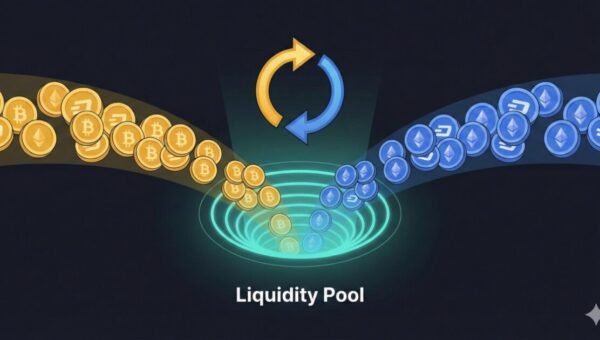
ChicksX is a digital asset exchange platform that combines cryptocurrency trading with traditional currency pairs. This article examines its technical architecture, order matching mechanics, liquidity provisioning model, and the operational checkpoints practitioners should apply when integrating or trading on the platform. We focus on verifiable platform features and the decision points that matter for API integrators, market makers, and high frequency traders.
Platform Architecture and Trading Infrastructure
ChicksX operates as a centralized exchange with offchain order matching and settlement. User deposits move into platform controlled wallets, and trades execute against an internal ledger before onchain withdrawals are processed. This architecture enables sub second order execution and price feeds that update in real time, but introduces custodial risk and requires trust in the platform’s solvency controls.
The exchange supports spot trading for major cryptocurrency pairs (BTC, ETH, USDT, and others) alongside fiat onramps and offramps. Order types typically include market, limit, and stop limit orders, though the exact feature set varies by trading pair and account tier. API rate limits and WebSocket feed latency become critical for algorithmic strategies; verify the current specifications in the platform documentation before building execution logic around assumed throughput.
Liquidity comes from retail traders, institutional market makers, and any platform provided liquidity backstop. Some exchanges introduce internal market making to narrow spreads during low volume periods. If ChicksX employs this model, confirm whether the platform trades against its own order book and how that activity is disclosed.
Order Matching and Execution Priority
ChicksX likely uses a price time priority matching engine, where the best priced order at each level executes first, and orders at identical prices fill in chronological sequence. This is the standard model for centralized exchanges, but edge cases matter. If two orders arrive within the same millisecond window, the tie breaking rule (order ID sequence, random selection, or other logic) can affect fill rates for high frequency strategies.
Post only flags allow makers to ensure their orders never take liquidity and incur taker fees. If the platform does not reject or cancel post only orders that would match immediately, you may pay taker fees unintentionally. Test this behavior in a sandbox environment before deploying production strategies.
Self trade prevention settings determine whether orders from the same account or linked accounts can match against each other. Absent this feature, wash trading detection algorithms or unintended inventory rotations become manual problems. Confirm whether ChicksX supports account level or API key level self trade controls.
Fee Structure and Rebate Models
Most centralized exchanges operate maker taker fee schedules, where passive limit orders receive lower fees or rebates and aggressive market orders pay higher rates. ChicksX fee tiers typically depend on 30 day trading volume and native token holdings, if the platform issues one. Higher volume or staked balances unlock discounted rates, but rebate calculations vary. Some platforms credit rebates instantly on each trade, while others batch them monthly. The timing affects capital efficiency for market making strategies with thin margins.
Verify the current fee schedule and whether fees apply to the base currency, quote currency, or both. A 0.1% fee on a BTC/USDT trade could deduct USDT from your order proceeds or BTC from your filled quantity, depending on implementation. API responses should specify the exact fee amount and currency, but manual calculation from trade confirmations is a useful cross check.
Withdrawal fees for onchain transactions are typically flat per asset and change based on network congestion. During periods of high gas costs, exchanges may delay fee updates, creating arbitrage windows or unexpected withdrawal costs. Track the fee announcement channel and compare against mempool conditions before executing large withdrawals.
Custody and Withdrawal Processing
Deposits and withdrawals on ChicksX involve onchain transactions for cryptocurrency and bank transfers or card payments for fiat. Cryptocurrency deposit addresses are either static (one address per user per asset) or dynamic (new address per deposit). Static addresses simplify reconciliation but increase privacy leakage. Dynamic addresses require tighter API integration to poll for newly generated addresses before each deposit.
Withdrawal processing follows a manual or automated approval workflow. Automated withdrawals execute within minutes for amounts below a threshold, while manual review applies to larger sums or flagged accounts. The threshold is rarely disclosed in advance and may vary based on account age, KYC tier, and recent activity. If your use case requires predictable withdrawal timing, test with incrementally larger amounts to map the approval boundaries.
Hot wallet limits determine the maximum amount the platform can process instantly from online storage. Withdrawals exceeding this cap wait for cold wallet transfers, which can take hours or days depending on the exchange’s operational schedule. For treasury operations or large arbitrage moves, confirm the platform’s publicly stated hot wallet allocation and recent withdrawal delays reported by other users.
Worked Example: Executing a Limit Order via API
A market maker wants to place a 1.0 BTC buy limit order on the BTC/USDT pair at $40,000. The maker connects via the REST API and submits an order with the following parameters:
symbol: BTC/USDT

side: buy

type: limit

quantity: 1.0

price: 40000

timeInForce: GTC

postOnly: true
The platform validates the order, checks available USDT balance (40,000 USDT plus fee reserve), and confirms the post only flag. If the current best ask is $40,001, the order posts to the book. If the best ask is $40,000 or lower, the order would match immediately, so the platform rejects it to honor the post only instruction.
Assume the order posts successfully. Minutes later, a taker submits a 1.2 BTC market sell. The matching engine fills the maker’s 1.0 BTC order first at $40,000, applying a maker fee of 0.05% (20 USDT). The taker’s remaining 0.2 BTC matches against the next price level. The maker receives 1.0 BTC minus any internal custody transfer delays, and their USDT balance decreases by 40,020 USDT.
The maker polls the order status endpoint and confirms the fill. The API response includes fill price, fee amount, fee currency, and timestamp. They reconcile this against their local ledger and update inventory tracking.
Common Mistakes and Misconfigurations
- Ignoring rate limits: Exceeding API call quotas results in temporary bans, interrupting execution loops. Implement exponential backoff and track burst allowances separately from sustained throughput.
- Assuming instant settlement: Onchain withdrawals require network confirmations. A 6 confirmation requirement for Bitcoin means roughly 60 minutes minimum latency under normal conditions.
- Hardcoding fee assumptions: Fee schedules change with volume tiers and platform promotions. Query the fee endpoint dynamically or cache values with short TTLs.
- Neglecting order minimums: Each trading pair enforces minimum order sizes in base currency or quote currency terms. Orders below this threshold are rejected, breaking percentage based rebalancing logic.
- Skipping nonce or timestamp validation: Some API implementations require strictly increasing nonce values or timestamp windows for replay protection. Test edge cases like system clock drift or concurrent requests.
- Relying on WebSocket alone: WebSocket connections drop silently. Combine with periodic REST snapshots to detect missed messages and rebuild order book state.
What to Verify Before You Rely on This
- Current API rate limits per endpoint and account tier, including burst capacity and reset intervals.
- Supported order types for your specific trading pairs, especially whether iceberg, trailing stop, or OCO orders are available.
- Withdrawal processing times for your asset and amount range, including hot wallet thresholds and manual review triggers.
- Fee schedule effective date and whether volume calculations use calendar months or rolling 30 day windows.
- KYC requirements for your jurisdiction and withdrawal limits at each verification tier.
- Deposit confirmation requirements per blockchain (number of confirmations before credited balance).
- Platform insurance or proof of reserves disclosures, if you are evaluating custodial risk.
- Self trade prevention options and whether they apply at account, subaccount, or API key scope.
- Maintenance windows and historical uptime, particularly for pairs you plan to trade actively.
- Regional restrictions or IP blocking policies that could affect API access from your infrastructure.
Next Steps
- Deploy a testnet or paper trading instance of your strategy to measure actual fill rates, latency distribution, and fee impact before committing capital.
- Integrate order book snapshots and trade history exports into your monitoring stack to detect anomalies in execution quality or fee application.
- Establish a withdrawal testing cadence (weekly or monthly small withdrawals) to verify continued platform access and measure processing times under current conditions.
Category: Crypto Exchanges